In the aerospace industry, where highly specialized materials and complex chemical processes are essential, REACH represents both a constraint and a strategic opportunity.
🔍 What is the REACH regulation?
👉 An ambitious regulatory framework:
- Registration: Chemical substances must be registered with the European Chemicals Agency (ECHA) to establish a unified system for chemical management.
- Evaluation: Substances are assessed to identify risks.
- Authorisation or restriction: Substances of very high concern (SVHCs) are subject to authorization or outright restriction.
- Limitation: The use of hazardous chemicals is restricted.
👉 A unique challenge for aerospace:
- Materials like chromates and certain solvents, indispensable for ensuring durability and safety, are now restricted. This forces a rethinking of processes while maintaining very strict performance standards.
And internationally?
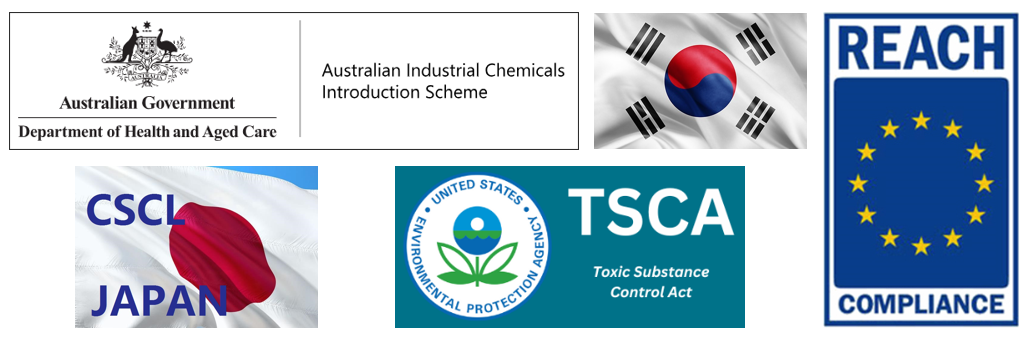
While REACH remains the most comprehensive and stringent regulatory framework to date, other countries have adopted or are adopting similar approaches to manage chemical risks. However, regional differences in processes, required data, and scope present challenges for companies operating globally.
International regulatory frameworks:
- United States: TSCA (Toxic Substances Control Act)
TSCA maintains a single list of restricted substances and an approved substances list, meaning a substance is either allowed or banned. This differs from REACH's phased approach, which includes:- A restricted substances list requiring progressive elimination.
- An authorization list for SVHCs, requiring ECHA approval for EU use.
- Canada: CEPA (Canadian Environmental Protection Act)
While less exhaustive than REACH, CEPA establishes a robust framework to identify and regulate concerning substances. - Japan: CSCL (Chemical Substances Control Law)
Focused on new substances, CSCL requires pre-market evaluations. Its scope is narrower than REACH but emphasizes risk prevention. - South Korea: K-REACH
Introduced in 2015 and modeled on REACH, K-REACH requires registration, evaluation, and reporting of chemical substances. It features strong collaboration with European companies for regulatory harmonization. - China: MEE Order No. 12 (formerly MEP No. 7)
Focused on new substances not listed in the EU inventory, it has a simplified evaluation process that is progressively becoming stricter. - Australia: AICIS (Australian Industrial Chemicals Introduction Scheme)
AICIS regulates industrial chemicals entering the Australian market, prioritizing high-risk substances.
Other countries, such as Brazil, India, and various Asian nations, are also developing chemical regulations.
REACH and its specific impacts on the aerospace industry
Aerospace buyers should consider these critical points:
- Pressure on critical materials: Many essential materials are under scrutiny, driving the search for alternatives that are safer for human health and the environment.
- Regulatory compliance costs: Maintaining compliance involves costly registrations and keeping pace with regulatory changes.
- R&D challenges: Lengthy approval processes for new materials affect production timelines and innovation costs.
- Supply chain risks: Non-compliance can lead to supply chain disruptions, posing significant risks to operations.
🌟 When compliance with REACH becomes an opportunity
Despite its constraints, REACH can also be a driver of innovation and strategic advantage:
- Encouraging innovation: The regulation promotes the development of more sustainable and environmentally friendly materials. It also strengthens partnerships between industries and research laboratories.
- Boosting brand image: Proactive compliance enhances brand reputation, increasing trust among customers and investors.
- Future-proofing: Preparing for upcoming environmental standards improves resilience and long-term competitiveness.
📦 How does Aviatec, a chemical consumables stockist, manage REACH compliance?
Aviatec Global Aviation is EN 9120 certified. While this certification alone does not guarantee REACH compliance, it provides a solid foundation for traceability, documentation management, and supply chain communication.
To ensure full REACH compliance, we’ve implemented specific processes tailored to chemical management and regulatory requirements:
- Investment in training: Our teams are trained in REACH requirements and best practices.
- Proactive inventory management: We identify affected substances and remove them when necessary, offering compatible alternatives to customers.
- Enhanced communication with manufacturers: We ensure traceability through updated safety data sheets (SDS) and actively engage with manufacturers for clarity on regulatory questions.
- Client education: We regularly update our clients on regulatory changes impacting REACH through close collaboration with manufacturers.
- Optimized warehousing: Our storage complies with regulations, particularly product compatibility. Regular internal audits ensure ongoing compliance.
✈️ Is REACH a strategic lever for a more sustainable future?
While challenging, REACH pushes the aerospace industry to innovate and adopt more responsible practices. For companies, compliance is not just about meeting obligations—it’s about leveraging this transformation to gain a competitive edge.
Through a proactive approach, REACH compliance can become a strategic lever for a more sustainable future. 🌍